

 +370 5 210 70 50



Traffic management methods

In Vilnius, all intersections controlled by traffic lights are managed according to current traffic flows (adaptively) in order to make the most efficient use of time at intersections and maximize traffic flow capacity. Traffic situations are constantly monitored and evaluated, and once the results of the analyses are received, changes are made to the traffic light regulation and control programs.
To understand the principles of traffic control using traffic lights, it is necessary to know the methods of traffic management:
Fixed operating mode at intersections
Fixed mode at intersections is an operating mode in which intersections operate according to a pre-set signal program and the duration of the green signal in each signal group remains strictly unchanged. Programs of this type are used when there is a malfunction at the intersection. Under normal circumstances, intersections always operate in flexible mode, taking into account traffic sensors.
Intersection flexibility (cycle)
Intersection flexibility (cycle), coordinated operation – changes in the duration of the green signal within set limits, depending on traffic flows, i.e., the duration of the green signal varies in each signal group depending on the number of cars detected by traffic sensors and the occupancy of the detection zone. The signal program has a fixed cycle time during which the green signal must be activated for each direction. With a fixed cycle time, intersections are coordinated with each other (intersections have the same common cycle time), thus creating a green wave between intersections.
Full intersection flexibility
Full intersection flexibility (without cycle time), uncoordinated operation – the duration of the green signal depends directly on the traffic flows at the intersection. The minimum and maximum durations of each phase are defined, while the cycle time is irrelevant and variable. This control method is used at intersections that are far from other traffic light-controlled intersections, as it increases the capacity of the intersection but does not allow for coordination with other nearby intersections or integration into a green wave.
Real-time traffic optimization method
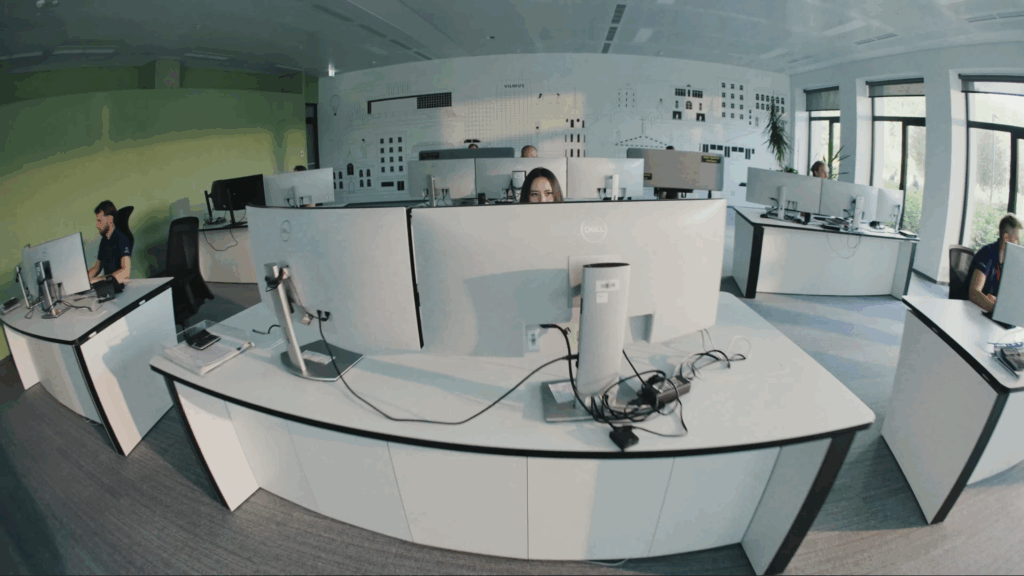
MOTION (Method of the Optimization of Traffic Signals In Online Controlled Networks) is a real-time traffic optimization method. After receiving data on traffic flows from traffic sensors, the Traffic Management Center server calculates the optimal signal program and phase times for each intersection direction. The server also determines the most appropriate cycle time and green wave parameters. Everything is done automatically every 6 minutes. This method is used at about 120 intersections in the city. This method allows for a more efficient and rapid response to sudden changes in traffic flows and the beginning and end of peak traffic hours. The image shows the intersection signal program generated by MOTION.