


 +370 5 210 70 50



Traffic management in Vilnius
Purpose and functions of the Traffic Management Center
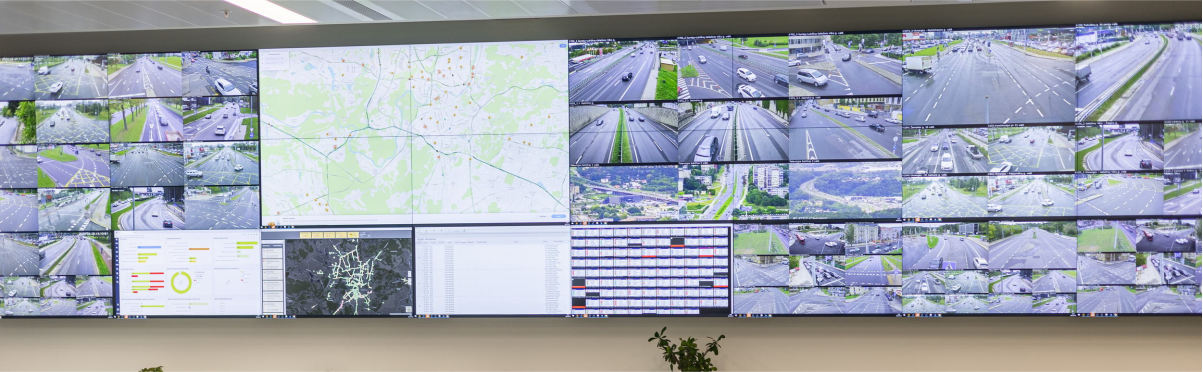
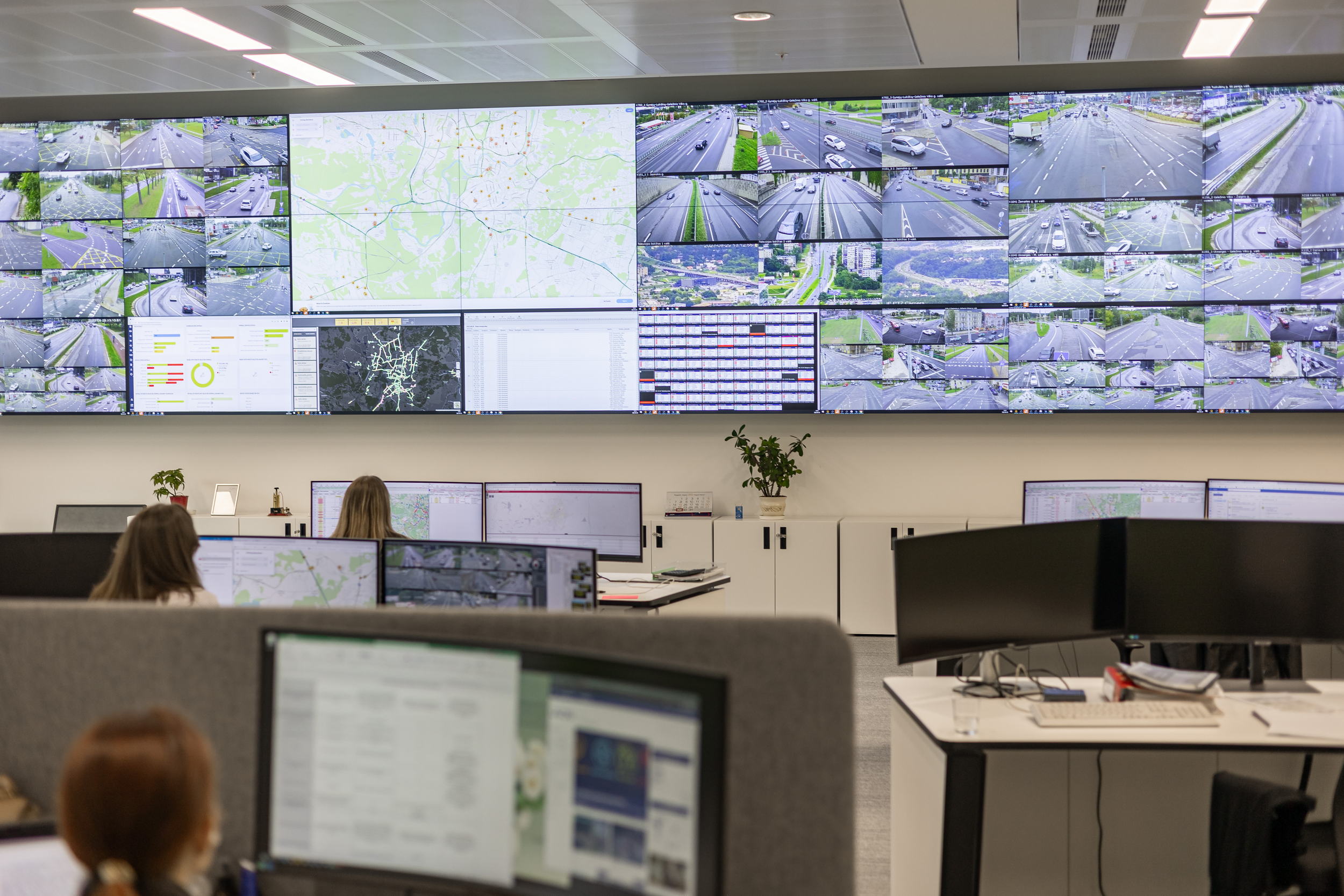
The Vilnius Traffic Management Center is located at Laisvės pr. 10A, where all the equipment necessary for the smooth operation of the centralized traffic management system is installed.
Professional operators and engineers from the Traffic Management Department work here.
The purpose of the traffic management center
The center’s goal is to effectively manage traffic and increase traffic safety in Vilnius. The brain of the centralized traffic management system is a modern server room equipped with hardware designed to process data received from traffic sensors and implement the main traffic management algorithm. The servers store information about all intersection signal programs, diagrams, traffic optimization, and planning parameters.
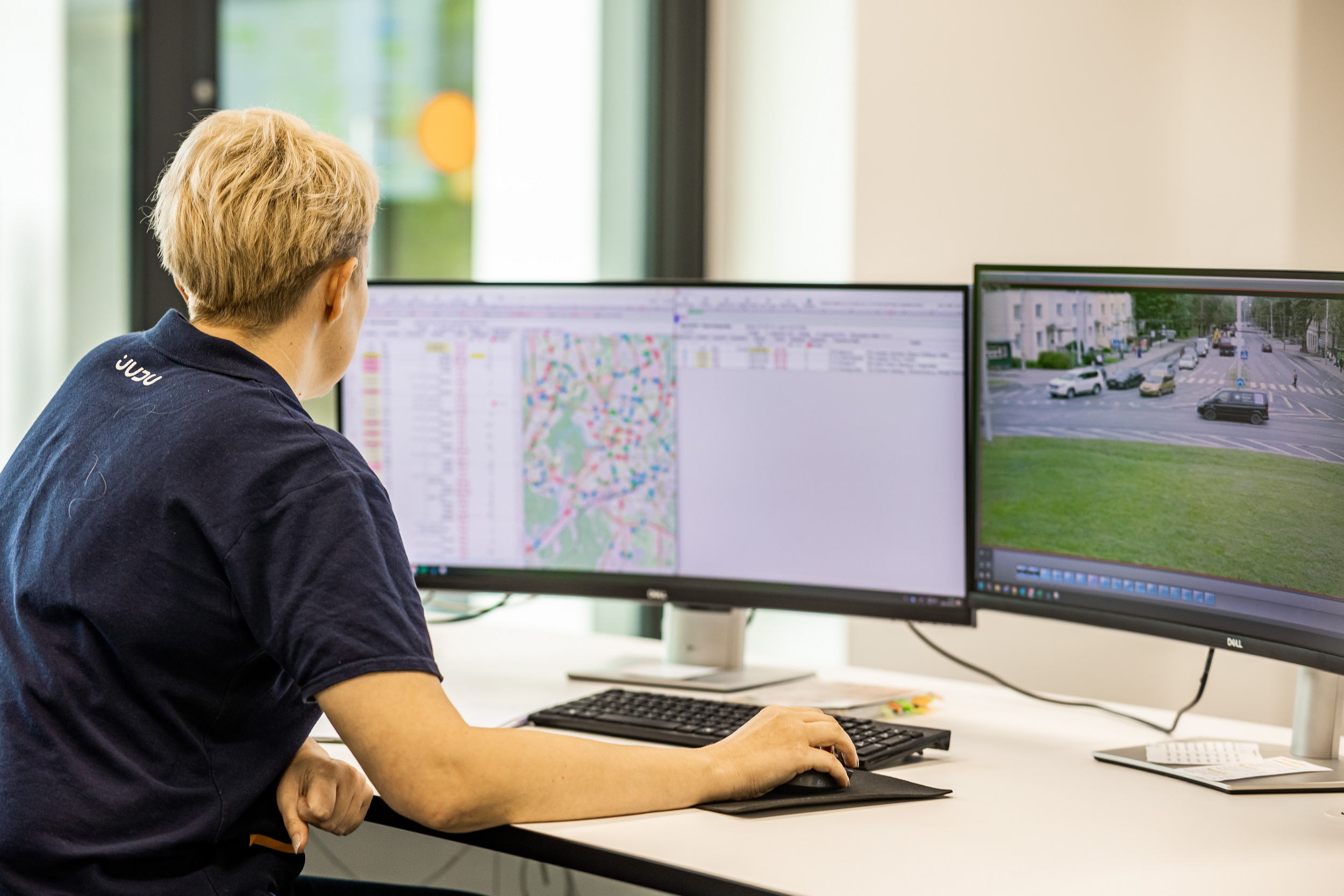
The work of traffic control center operators and engineers involves ensuring the precise operation of the traffic control system, monitoring and analyzing traffic flows, creating and activating special signaling programs, and responding promptly to malfunctions and unusual traffic situations.
The Vilnius city traffic management system consists of:
- Traffic control center;
- Traffic light-controlled intersections and pedestrian crossings with traffic controllers and sensors. Map →
- Video surveillance system. Map of video surveillance cameras →
- Driver information display system;
- System of devices for recording traffic violations. Map of devices for recording violations and information boards for drivers →
- Driver information system. Traffic situation map →
Video surveillance system
The traffic management system consists of video surveillance cameras, servers, software, and video surveillance devices (monitors).
Traffic management methods
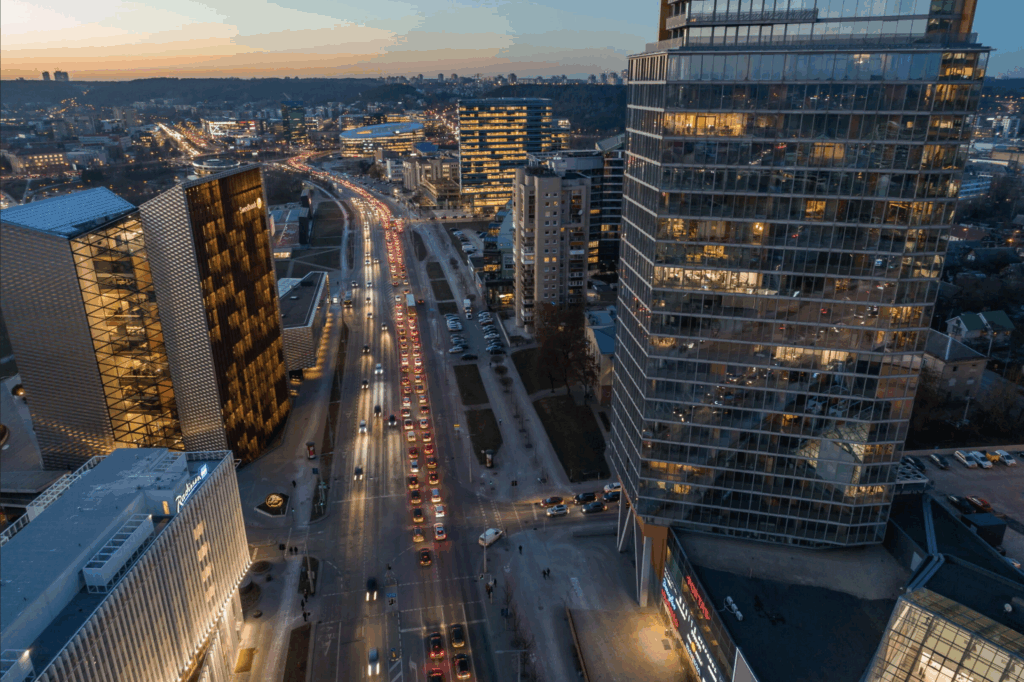
All intersections in Vilnius that are controlled by traffic lights are managed adaptively (according to current traffic flows) to make the most efficient use of time at intersections.
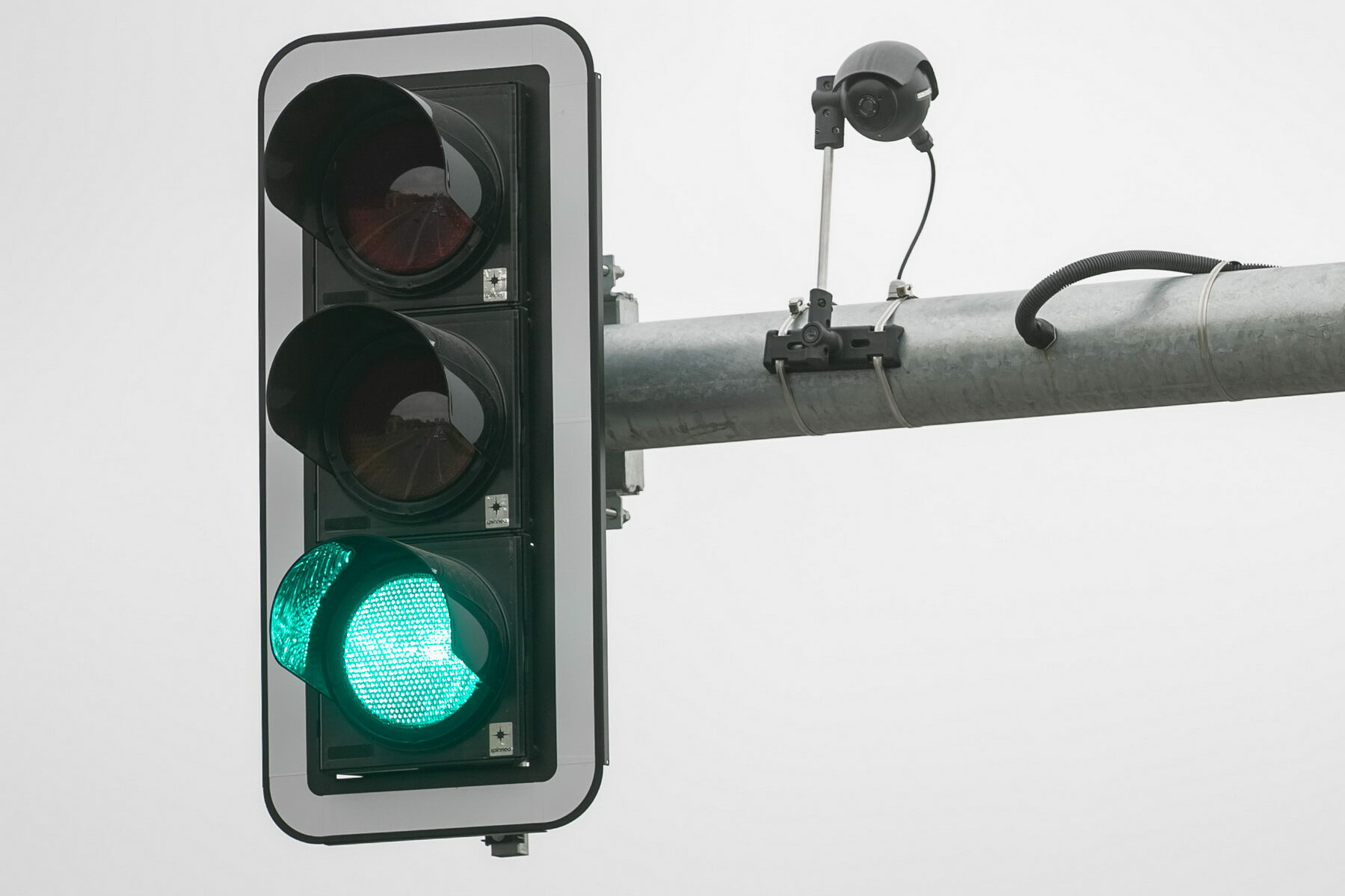
Traffic sensors
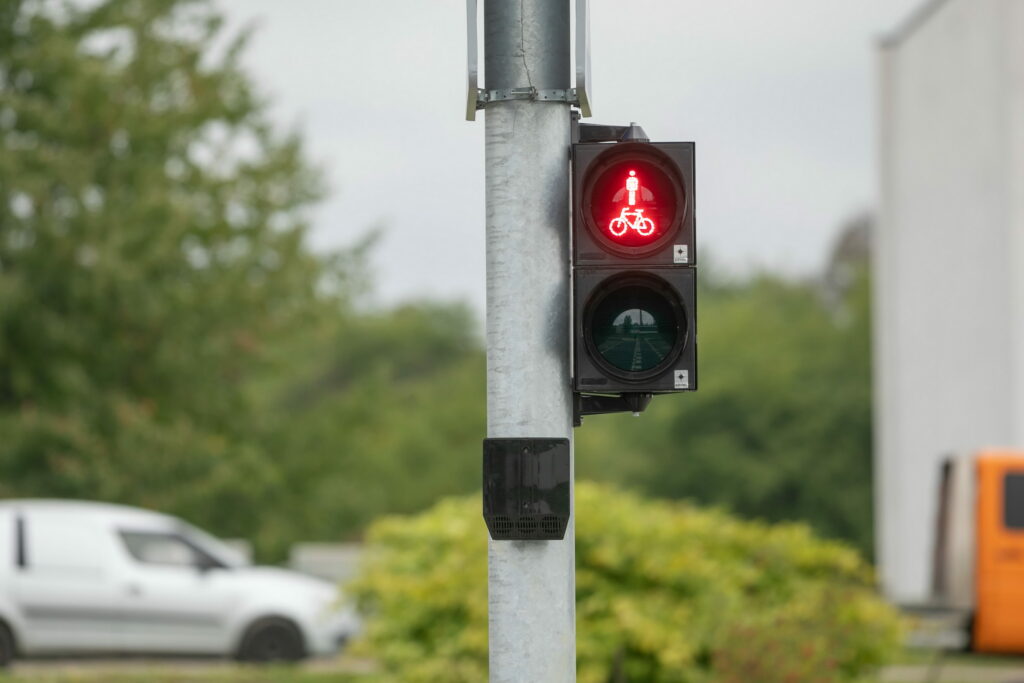
Traffic sensors detect (count) traffic participants moving at intersections regulated by traffic lights or pedestrian crossings. They are necessary to ensure the adaptive operation of intersections.

Devices for recording traffic violations
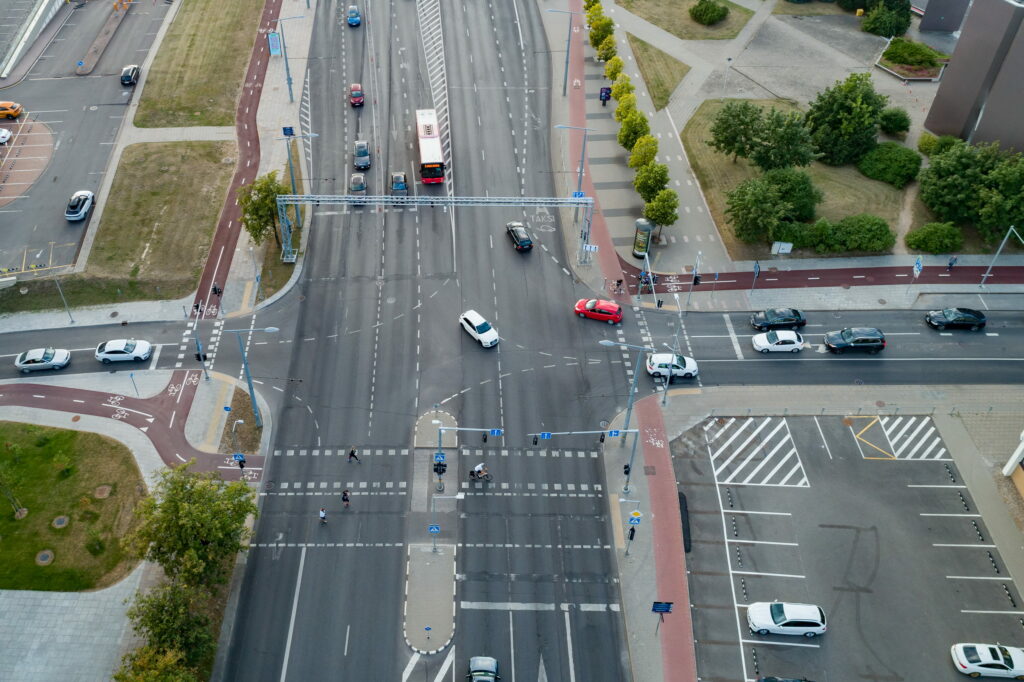
The traffic violation detection system is a measure to discipline drivers who commit violations. Three types of traffic violations are detected.
Driver information display boards
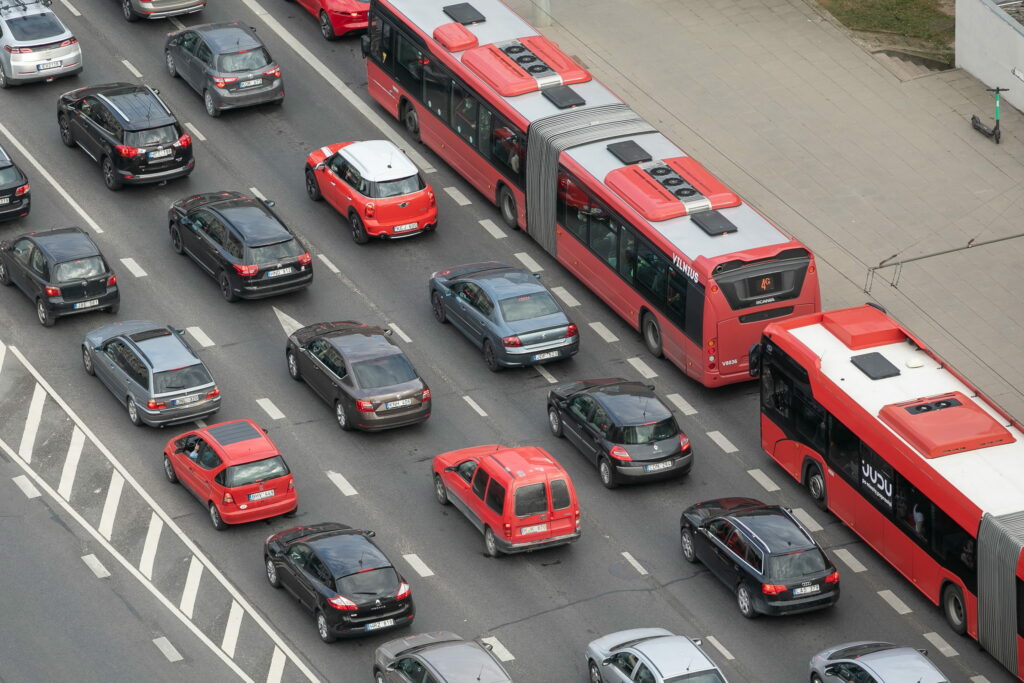
The driver information display system is a group of electronic information boards with variable text, located in strategically important places in the city.
Traffic management concept
Traffic management system operating principles and traffic organization solutions.
As road users, we often do not think about how traffic is managed in the city, who regulates traffic, and awhy it is necessary. However, when traffic lights at an intersection or pedestrian crossing go out (for example, due to power outages or traffic accidents that knock down traffic lights), we notice that it becomes almost impossible to pass through the intersection or cross the crossing safely and without disruption, even though according to the Road Traffic Regulations, in such cases, road signs, which also perform a traffic control function, should be followed.
The benefits of a traffic management system are most evident in such situations: automatic traffic management in real time based on current traffic flows and green corridors ensures greater traffic flow capacity and shorter downtime (which reduces vehicle emissions), clear traffic regulation for all road users and separation of different maneuvers (turns, U-turns, pedestrian crossings, etc.), which ensures the safety of road users.

SITRAFFIC Server software
Traffic management in Vilnius is carried out using SITRAFFIC Server software. SITRAFFIC Server, which operates around the clock, monitors the operation of the system and, in the event of any malfunctions, sends notifications to the Sitraffic Scala program, where these notifications are monitored by traffic management center operators. All malfunctions are responded to promptly and, if possible, efforts are made to eliminate them within an hour. SITRAFFIC Scala provides the ability to monitor the status of intersections and their equipment in real time, as well as their operating parameters, and to change the operating modes of intersections in order to improve the current traffic situation.
SITRAFFIC Office software
SITRAFFIC Office software is used to plan new intersections or refine existing parameters. This tool can be used to create entire corridors (intersection networks) from individual intersections, enter traffic flow optimization parameters, create green waves, and enter transport sensor parameters. With SITRAFFIC Office, it is possible to adjust intersection signal programs or create new ones and send them directly to intersection controllers.
The brain of the traffic management system – the server room
The brain of the centralized traffic control system is a server room equipped with hardware for processing data received from traffic sensors and implementing the main traffic control algorithm. The servers store information about all intersection signal programs, diagrams, traffic optimization, and planning parameters. It is very important to maintain uninterrupted communication with intersection controllers, as traffic flow optimization is performed directly from the Traffic Control Center.
Let’s not forget that traffic and traffic system operations are monitored daily by traffic control operators who, upon noticing any disruptions (traffic incidents, unusual congestion, malfunctions, etc.), they cooperate with police officers and the company responsible for traffic light maintenance, switch traffic control plans, and inform road users by various means: driver information boards, radio, and traffic situation maps. This ensures that traffic problems are solved quickly and road users are kept informed.
Interested in more detailed information about traffic management activities in Vilnius?
Visit the Traffic Management Center during its open house days (information about these is posted on the JUDU Facebook page and website). You can also request additional tours for groups of up to 15 people by emailing [email protected].